

Have you ever had one of those days where your brain just can’t keep up, no matter how much sleep you get, or how many cups of coffee you drink? That constant fog, forgetfulness, and fatigue might not just be tiredness; it could be a sign of cognitive overload symptoms. In simple terms, this happens when your brain is trying to process more information than it can handle, leaving you stressed, unfocused, and mentally exhausted.
Modern professionals face endless emails, notifications, and back-to-back meetings that trigger mental overload. The constant stream of information makes it harder to think clearly, make decisions, or even relax.
In this article, you’ll discover 10 key cognitive overload symptoms, the subtle signs that your mind is under too much strain. Recognizing them early can help you protect your focus and energy. Sometimes, taking a few moments to pause, reorganize tasks, or reset your routine can make a world of difference, allowing your brain to recover naturally from constant information overload.
Contents
ToggleWhat Is Cognitive Overload?
Cognitive overload happens when your brain is handling more information than it can process at once. It’s like having too many tabs open on your laptop, everything starts to slow down, and nothing works smoothly. That’s your brain on overload, struggling to keep up with endless thoughts, tasks, and notifications.
Normally, your brain filters what’s important and helps you stay focused. But when your mental workload keeps piling up, like juggling emails, messages, and decisions all day, that balance breaks. Your brain’s ability to manage focus and energy weakens, leaving you distracted and mentally tired.

Cognitive Overload Examples in Real Life
- For instance, I was once writing an important email when messages started popping up, my phone rang nonstop, and my boss asked for an urgent update. I felt completely scattered, and that’s exactly how cognitive overload hits.
- Another example is that, You’re scrolling through social media while cooking dinner, replying to a friend’s text, and mentally planning tomorrow’s to-do list. By the time you sit down, your mind feels heavy even though you haven’t done anything physically exhausting. That’s another sign of cognitive overload sneaking into your daily routine.
10 Cognitive Overload Symptoms You Shouldn’t Ignore
When your brain is constantly processing information without a break, it starts to show signs of cognitive overload symptoms. Here are the ten most common ones to look out for:
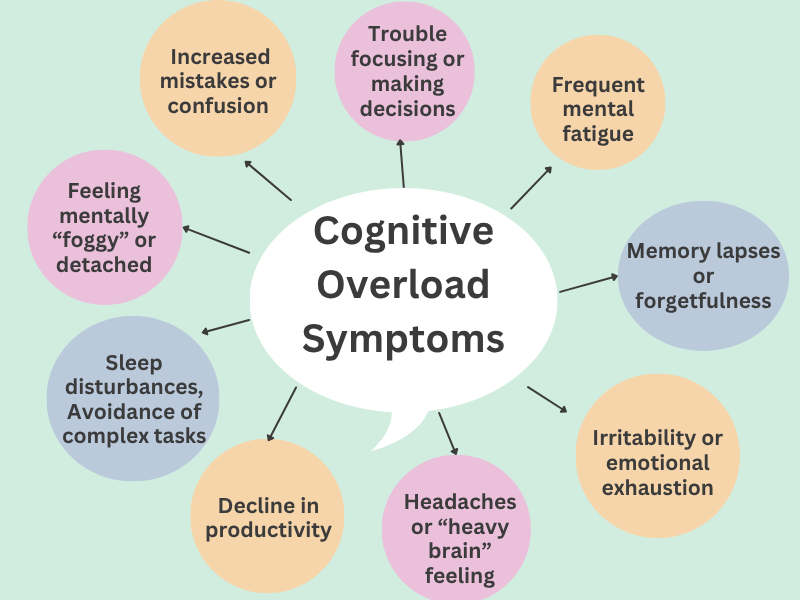
1. Trouble focusing or making decisions
When your brain is overloaded, even simple decisions like choosing what to eat, can feel mentally exhausting. You might notice your focus slipping easily or struggle to make clear choices because your brain is juggling too much information at once.
2. Frequent mental fatigue
You feel drained even after a full night’s rest. This isn’t just physical tiredness, it’s a sign that your mind is carrying a heavier mental workload than it can handle. It often shows up as constant exhaustion or a lack of motivation to start new tasks.
3. Memory lapses or forgetfulness
Forgetting appointments, misplacing items, or losing track of what you were about to do are clear signals of cognitive overload. Your brain’s short-term memory struggles to function properly when it’s flooded with too many inputs.
4. Irritability or emotional exhaustion
Little things that normally wouldn’t bother you suddenly start to feel overwhelming. You might snap at others, feel emotionally drained, or withdraw from conversations. These are signs that your emotional energy is being drained by continuous mental overload.
5. Headaches or “heavy brain” feeling
It’s that dull pressure in your head, like your mind is weighed down. When your brain feels heavy, it’s often a sign that it’s been working nonstop without enough rest or downtime.
6. Sleep disturbances
Even when you’re tired, your brain refuses to switch off. You replay work tasks or personal worries at night, keeping your mind active when it should be resting. Over time, this constant stimulation makes it harder to fall or stay asleep.
7. Decline in productivity
You sit in front of your computer for hours but feel like nothing gets done. When your mental workload exceeds what your brain can process efficiently, tasks take longer, creativity drops, and motivation fades away.
8. Increased mistakes or confusion
You may find yourself making errors you normally wouldn’t, sending the wrong email, missing deadlines, or mixing up details. This happens because your brain feels completely overloaded and struggles to process new information accurately.
9. Feeling mentally “foggy” or detached
It feels like your mind is covered in a fog. You’re physically present but mentally distant. This happens when your brain has processed too much for too long, leading to that hazy, detached feeling often linked with mental overload.
10. Avoidance of complex tasks or social interactions
When your mind is already at capacity, even simple conversations or problem-solving can feel like too much. You might start avoiding challenging tasks or social situations, not because you’re lazy, but because your brain needs relief from constant stimulation.
How to Manage and Treat Cognitive Overload
When your mind feels cluttered and overstimulated, the good news is, recovery is possible. Cognitive overload treatment isn’t about doing less work; it’s about helping your brain recover from constant mental strain. A few mindful changes in your day can make a huge difference in how clearly you think and how calm you feel.
1. Take short mental breaks
Give your brain short pauses throughout the day. Even two to three minutes of deep breathing or stepping away from screens can help your mind decompress. These moments of stillness allow your thoughts to settle, reducing the effects of information overload.
2. Practice self-regulation
Cognitive self regulation means recognizing when your brain needs rest. If you notice irritability, distraction, or mental fog, take a pause to reset, make a list, clear your workspace, or refocus your thoughts.
3. Reduce digital distractions
Information overload can be reduced by setting gentle limits on how often you check your phone, email, or social apps. Try using “focus” modes or silent notifications during deep work hours. Learning how to limit digital distractions doesn’t just save time, it gives your mind the quiet it needs to recharge and think clearly.
4. Simplify your workload
When your brain is juggling too many tasks, your mental workload increases rapidly. Break large projects into smaller, manageable chunks. Prioritize what truly matters each day instead of trying to do everything at once. This not only boosts productivity but also gives your brain the space to focus better.
5. Restore balance through mindfulness
Mindfulness and gentle breathing exercises help calm a brain on overload. A few minutes of slow breathing, journaling, or quiet reflection can reset your thoughts and lower stress levels. Even short mindfulness breaks between tasks can make your mind feel lighter and clearer, much like the sense of renewal people experience after meditation for mental exhaustion.

When to Seek Professional Help
If you’ve been stuck in a cycle of constant mental exhaustion, where rest, meditation, or time off don’t seem to make a difference, that’s your cue to pause and get extra support. When cognitive overload symptoms keep showing up no matter how hard you try to reset, it might be more than just daily stress.
Reaching out to a therapist or counselor can help you understand what’s really happening beneath the surface. Whether it’s early burnout, chronic stress, or something deeper. Professional guidance can also help you build healthier habits, organize your thoughts, and lighten the mental load you’ve been carrying.
Remember, asking for help isn’t a sign of weakness. It’s one of the strongest things you can do to protect your mind and energy before your stress gets out of control.
Conclusion
When your mind starts feeling foggy, distracted, or drained, those aren’t random bad days. They’re early signs of cognitive overload symptoms. It’s your brain’s way of saying, “I need a break.”
By noticing these signals early and making small changes like limiting distractions, pausing to breathe, or resetting your routine, you give your mind the space to recover and think clearly again.
Remember, protecting your mental energy isn’t about doing less, it’s about finding the right balance for yourself. It’s about creating balance. When your mind feels calm and clear, everything from work to personal life starts to flow more naturally.
Frequently Asked Questions (FAQs)
How to tell if your brain is overloaded?
You can tell your brain is overloaded when you start feeling mentally foggy, forget small details, or struggle to focus. Everyday tasks feel harder, and decision-making becomes exhausting. It’s your mind’s way of signaling it needs rest and fewer distractions.
What happens when cognitive load is too high?
When cognitive load is too high, your brain becomes overwhelmed by too much information. This leads to poor concentration, slower thinking, and emotional fatigue. Over time, it can cause burnout, anxiety, and decreased performance at work or school.
What are the symptoms of mental exhaustion?
Common symptoms of mental exhaustion include constant tiredness, low motivation, irritability, and trouble concentrating. You may also feel detached or emotionally numb. These signs mean your brain is overworked and needs time to recharge.
How to stop feeling mentally drained?
To stop feeling mentally drained, give your brain real breaks, unplug from screens, rest properly, and move your body. Try mindfulness, short naps, or spending time outdoors. Prioritizing sleep and simplifying your daily routine can also help restore focus and energy.